

Keep Hope Alive
Legacy, Leadership, and the Ongoing Work of Black Institution-Building


The passing of Jesse Jackson marks the close of one of the most consequential chapters in American civil rights history. For more than half a century, Jackson operated at the intersection of protest and policy, faith and politics, moral witness and electoral ambition. From his early work with Dr. Martin Luther King Jr. to the founding of the Rainbow/PUSH Coalition, Jackson expanded the vocabulary of coalition-building in American public life. His presidential campaigns in 1984 and 1988 did more than seek office; they reframed who could plausibly contend for it, widening the horizon for a generation that followed.
Jackson’s life was animated by a singular conviction: that access to the ballot, the boardroom, and the global stage must not be restricted by race or class. His rhetoric was often soaring, but his strategy was structural—registering voters, negotiating corporate accountability, pressing institutions toward inclusion. Whether one agreed with every tactic or not, his presence altered the political architecture of the late twentieth century.
In honoring Jesse Jackson, we are reminded that legacy is not accidental. It is constructed—deliberately, persistently, and often against resistance.
As we remember Rev. Jackson’s legacy, refer to the National Black Litany, more commonly known as his “I Am Somebody” affirmation.
This Week in History
February 17, 1936: Jim Brown is born
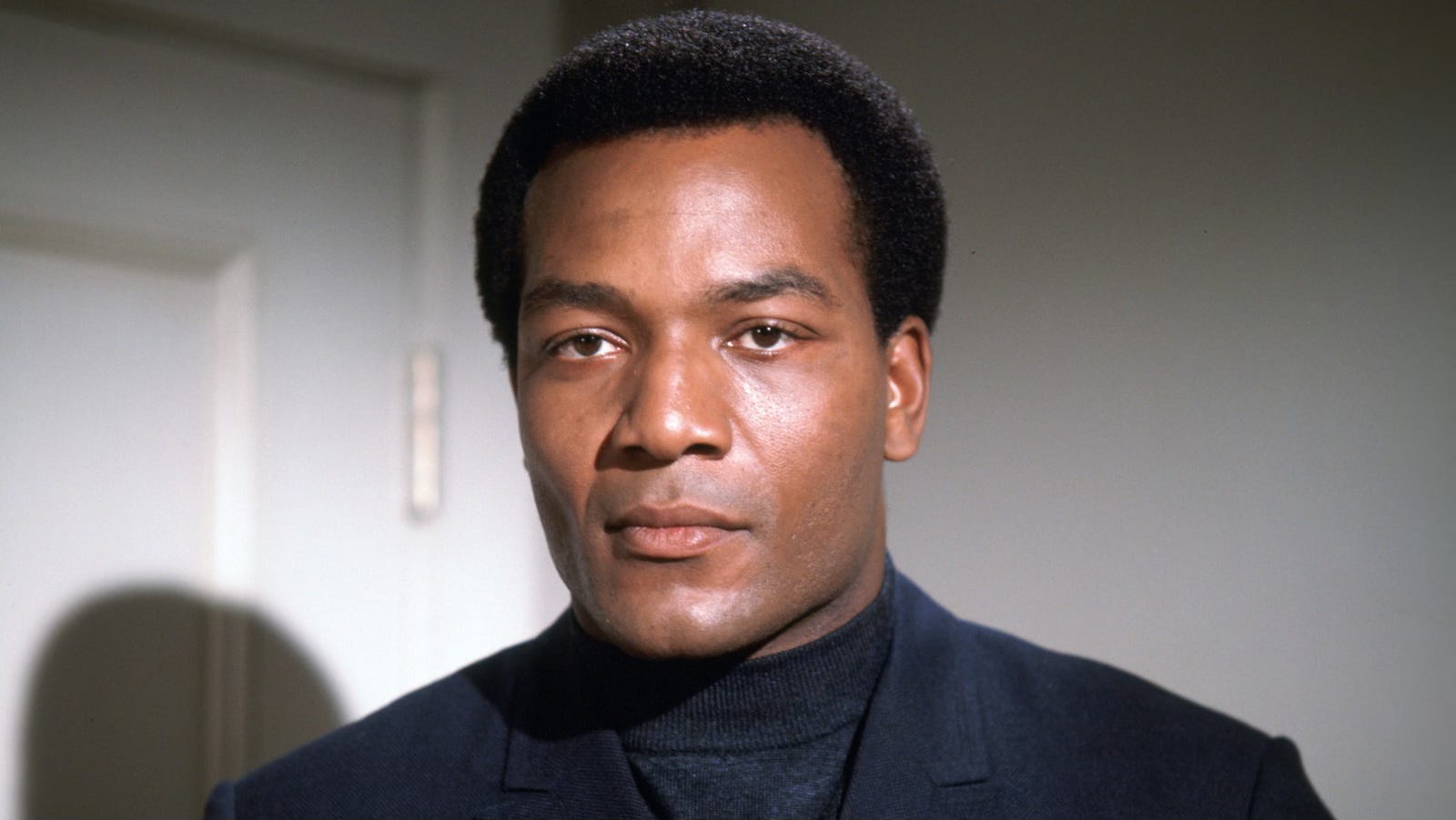
Born in St. Simons, Georgia, and raised in Manhasset, New York, Jim Brown would become one of the most formidable athletes in American history. At Syracuse University, he distinguished himself not only in football but also in lacrosse and track, demonstrating a range of athletic mastery that foreshadowed his professional dominance. Drafted by the Cleveland Browns in 1957, Brown transformed the running back position through a rare synthesis of power, agility, and field intelligence. He led the league in rushing eight of nine seasons and retired in 1965 at the height of his career—a decision that underscored an insistence on autonomy in an era when such control was rarely afforded to Black athletes.
Brown’s departure from football did not signal retreat but expansion. He transitioned into film at a moment when Hollywood was beginning, albeit cautiously, to reconsider the roles available to Black leading men. Appearing in major studio productions such as The Dirty Dozen (1967) and later in a series of action films throughout the late 1960s and 1970s, Brown cultivated a screen presence defined by physical authority and composure. His performances challenged prevailing cinematic stereotypes, positioning Black masculinity not as subordinate or comedic, but as central and formidable.
Yet his public life extended beyond athletics and entertainment. In 1967, Brown organized the Cleveland Summit in support of Muhammad Ali’s refusal to be inducted into the Vietnam War, convening prominent Black athletes to affirm Ali’s stance at significant professional risk. In doing so, Brown aligned celebrity with political conviction, helping to establish a model of athlete-activism that resonates today.
February 18, 1941: Emma C. Chappell is born
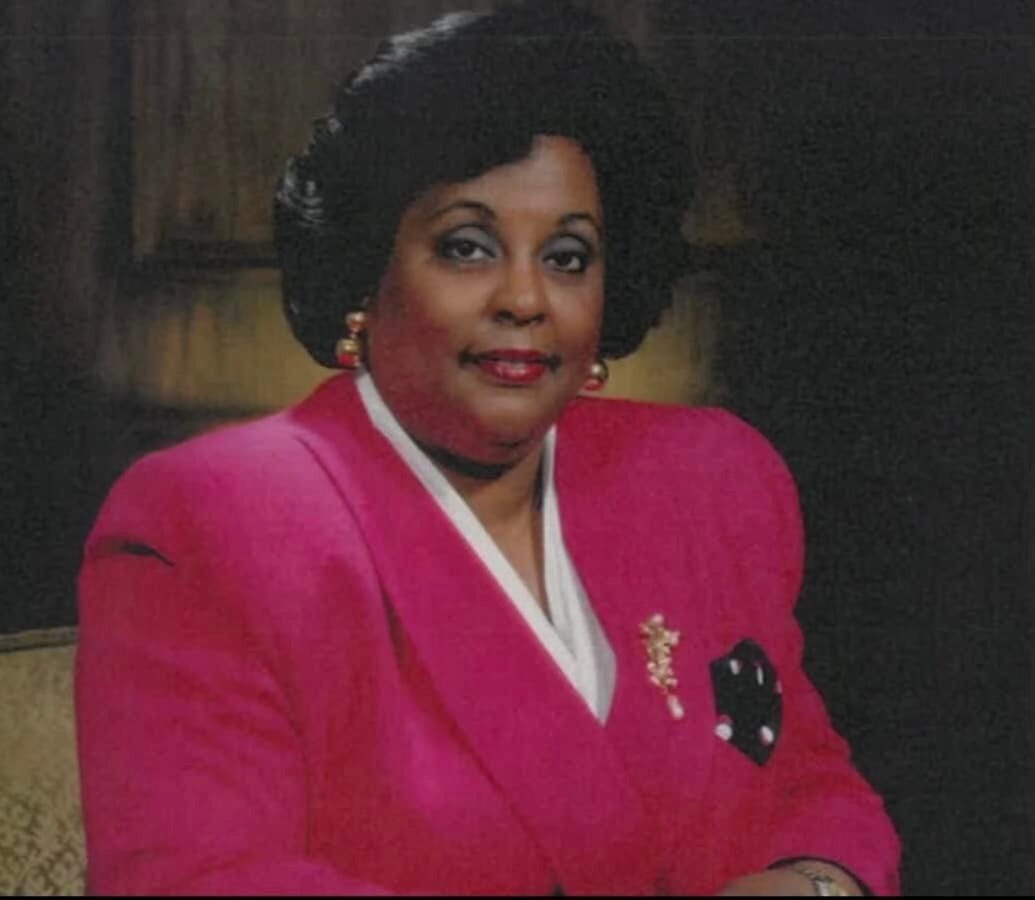
Emma C. Chappell was born in Philadelphia, Pennsylvania, at a time when Black access to capital remained structurally constrained by discriminatory lending practices. Rising through the ranks of the banking industry, she acquired technical expertise in commercial finance during an era when executive leadership positions were rarely extended to Black women. In 1992, she founded United Bank of Philadelphia, becoming the first Black woman in the United States to charter and lead a commercial bank.
Her achievement was not symbolic; it was infrastructural. Community-based banking institutions often serve as stabilizing anchors in neighborhoods historically excluded from mainstream financial systems. Under Chappell’s leadership, United Bank directed resources toward local entrepreneurs, small businesses, and community development initiatives. In doing so, she reframed financial stewardship as civic responsibility. Her career stands as a reminder that economic empowerment is not merely aspirational rhetoric– it is built through institutions capable of sustaining generational wealth.
February 18, 1931: Toni Morrison is born

Born Chloe Ardelia Wofford in Lorain, Ohio, Toni Morrison would become one of the most consequential literary voices of the twentieth century. Educated at Howard University and Cornell University, Morrison began her career as an editor at Random House, where she championed works by Black writers whose perspectives were often marginalized within mainstream publishing. Her own novels–including The Bluest Eye, Song of Solomon, and Beloved–reoriented American literature by centering Black interior life without concession to external validation.
In 1993, Morrison became the first Black woman to receive the Nobel Prize in Literature. Her work interrogated memory, trauma, language, and myth, insisting that the legacy of slavery and racial subjugation be understood not as peripheral history but as foundational to the American narrative. Morrison did not write to explain Black life to outsiders; she wrote to expand the moral and imaginative vocabulary of the nation itself. Her influence endures not simply through accolades, but through the generations of writers shaped by her disciplined clarity and artistic sovereignty.
February 21, 1936: Barbara Jordan is born

Barbara Charline Jordan was born in Houston, Texas, into a segregated South that offered few formal pathways to political leadership for Black women. Educated at Texas Southern University and Boston University School of Law, she entered public life through the Texas Senate before being elected in 1972 as the first ethically Black American woman and first Black woman from the South to serve in the U.S. House of Representatives.
Jordan’s national prominence emerged during the 1974 Watergate hearings, where her measured, constitutionally grounded address articulated the stakes of executive accountability with uncommon precision. Her speech was not theatrical; it was jurisprudential. She invoked the Constitution as a living covenant, reminding the nation that democratic legitimacy depends upon adherence to principle rather than personality. In 1976, she delivered the keynote address at the Democratic National Convention, further cementing her reputation as one of the era’s most disciplined orators.
Living Legend
February 23, 1971: Angela Alsobrooks turns 55
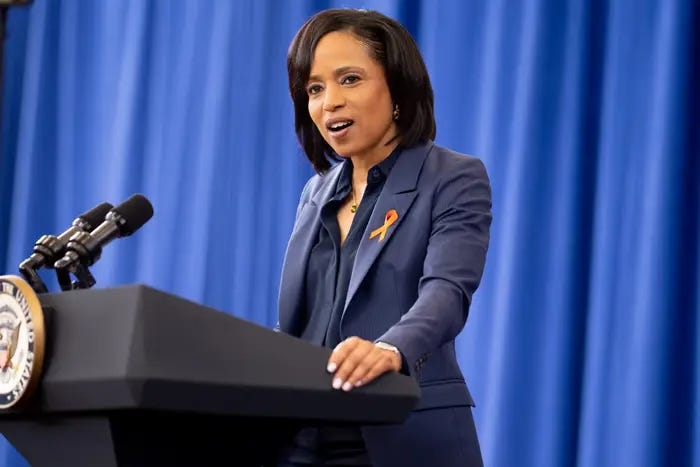
Raised in Prince George’s County, Maryland—one of the most affluent majority-Black counties in the United States—Alsobrooks’ ascent reflects the maturation of a political ecosystem built through decades of Black institutional stewardship.
Before assuming executive office, Alsobrooks served as the elected State’s Attorney for Prince George’s County, where she became the youngest and first woman to hold the position. Her tenure emphasized prosecutorial reform alongside public safety, navigating the complexities of criminal justice at a moment when national conversations around policing and equity were intensifying. In 2018, she was elected County Executive, becoming the first woman to lead the county. Her leadership has focused on economic development, education funding, and fiscal management—the often unglamorous but essential mechanics of governance.
Alsobrooks’ significance lies not merely in representation, but in administration. Prince George’s County has long stood as a case study in Black political and economic self-determination. To govern such a jurisdiction is to manage budgets, infrastructure, public safety systems, and development pipelines that affect hundreds of thousands of residents.
Her election to the United States Senate in 2024 made her Maryland’s first Black senator.
What Has Us Hyped This Week
February 17: Sommore’s Chandelier Fly premieres on Netflix
Per Netflix, “From riffing on hot topics to breaking down celebrity scandals, Queen of Comedy Sommore delivers her unapologetic perspective with bravado and style.”
February 20: Billy Preston: The Way God Planned It theatrical release
According to Doc NYC, “Mega-talented keyboardist and songwriter Billy Preston was often referred to as ‘the best musician in the room.’ Stylistically influenced by the Black church, Preston’s illustrious career includes collaborations with Aretha Franklin, the Rolling Stones, Elton John, the Beatles, and more. A private man who turned to drugs to dull the pain of personal trauma, his poignant story unfolds through insights from Billy Porter, Eric Clapton, and Ringo Starr, complemented by rare footage and an original score by Robert Glasper.”
February 23: Paradise season two premieres on Hulu
Sterling K. Brown and company return with the first three episodes of the season as we learn more about life in the bunker.
February 23: The Rise and Fall of Reggie Dinkins premieres on NBC at 8 p.m. EST
Per IMDb, “A fallen football player star seeks redemption and a chance to restore his tarnished reputation.”
Closing Thoughts
If you haven’t already, be sure to subscribe to our YouTube channel! We cover moments in Black American history, as well as current events.
Fashion designer Gordon Henderson has experienced renewed interest due to his friendship with John F. Kennedy Jr. and Carolyn Bessette Kennedy, but that is only a fraction of his story. We honor him in our latest YouTube documentary.
See you soon!
Love that your platform stays current and updated! We have truly departed with a Trail Blazer, Jesse Jackson. So much respect and love for our brother.💔🙏🏾